
Occupational Therapy offers an integrated curriculum that highlights "hands on" applications and fundamental courses that prepare students in their roles in traditional and emerging areas of practice. Courses are delivered in an engaging manner that cultivates learning while stimulating creativity, critical reasoning and evidence-based practice. With access to patient simulation, virtual human cadaver software, well equipped laboratories, the latest technology, and a comprehensive library-resource system, our students become clinically, professionally, and culturally competent in their field. The academic experience is enhanced by clinical and doctoral prepared faculty who are experts in their respective field. Strong emphasis is placed on community engaged immersive experiences with diverse cultures and ethnic groups.
Program of Study
Community Engagement
At Winston-Salem State University, community engagement is a fundamental aspect of our teaching, research and faculty and student service. In the MSOT program at Winston-Salem State University, community engagement is a fundamental aspect of our teaching, research and faculty and student service. Ongoing community service-learning includes life skills programs at the Winston-Salem Rescue Mission, local low-income housing facilities, Green Tree Peer Center, and The Enrichment Center to name just a few. We also train students to lead and participate in the CARFIT program for older drivers and Matter of Balance fall prevention classes.
Emphasizing Health Equity
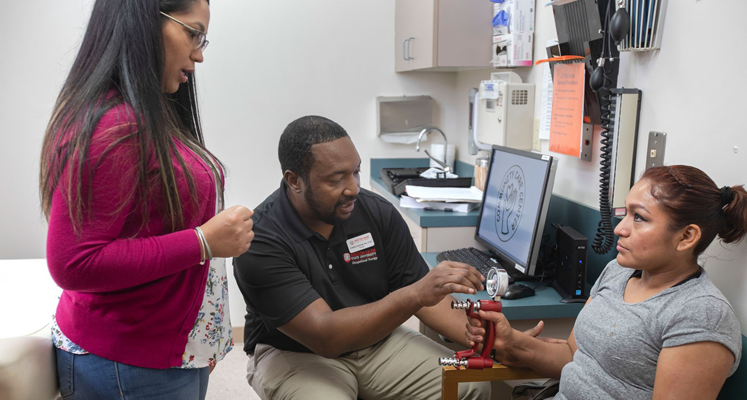
Occupational therapy students and faculty provide rehab services to individuals with chronic diseases at the local free Community Care Center In an academic year, students provide over 150 hours of care and education to patients.
Technology & Innovation
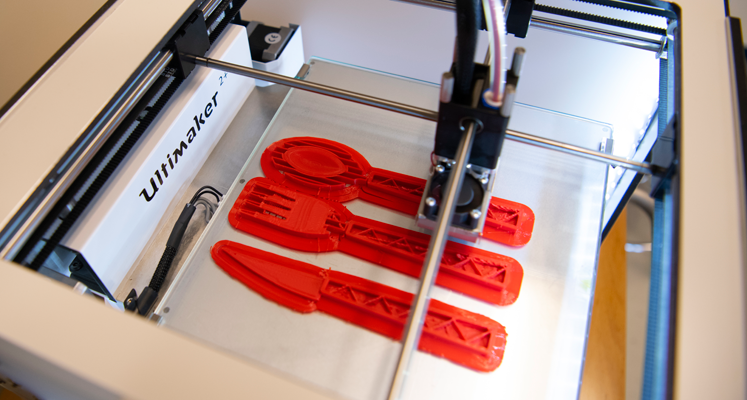
Virtual Hospital offers students an opportunity to build clinical skills in a simulated acute hospital setting and to engage in coordinated inter-professional care with other health science disciplines.
The WSSU MSOT program has enjoyed a warm and close relationship with Senior Services, Inc in Forsyth County for over 6 years. This partnership, particularly through the Williams Adult Day Center, has provided students with the opportunity to learn and develop foundational skills for becoming competent occupational therapy practitioners while also providing service and assistance to the Center participants. The OT Department looks forward to continued collaborations with Senior Services, Inc. through our role in administering the TAP program as a part of the Memory Connections Initiative over the next two years.
Innovative Curriculum Model
An integrated curriculum that highlights practical skills and fundamental courses that prepares students in their role as practitioner, administrator, educator-learner and researcher in traditional and emerging areas of practice.
Engaging Coursework
MSOT courses are delivered by a diverse clinical and doctoral prepared faculty who are experts in their respective field. Courses are delivered in a manner that cultivates learning while stimulating creativity, critical reasoning and evidence-based practice. Learning experiences progressively reinforce assessment and intervention through "hands on" applications.
Culture & Service
WSSU program attracts a diverse student body. Strong emphasis is placed on immersive experiences with diverse cultures, ethnic groups as well as opportunities for regional, community and international service learning and fieldwork affiliations. Professional service, student and faculty scholarship in state and national associations are expected and highly valued.
State of the Art Facilities
Accessibility to patient simulation, virtual human cadaver software and well equipped skill laboratories, wireless ready classrooms and a comprehensive library system across 16 campuses in the UNC University system.
Current Graduation Requirements can be found in the Graduate Catalog
WSSU Department of Occupational Therapy Curriculum Paradigm 2025
|
Fall Semester Year One |
Credits |
|
Anatomy and Physiology Bootcamp (part of orientation) |
|
|
OCC 5315 Foundation and Analysis of Occupational Therapy* |
3 |
|
OCC 5231 Basics of Healthcare Environment |
2 |
|
OCC 5312 Neurological Basis of Occupation |
3 |
|
OCC 5308 Therapeutic Interactions* |
3 |
|
OCC 5326 Functional Mobility in Occupation |
3 |
|
|
Total Credits= 14 |
|
Spring Semester Year One |
Credits |
|
OCC 6308 Psychosocial Basis of Occupation* |
3 |
|
OCC 5327 Research Methods and Application to Clinical Practice |
3 |
|
OCC 5421 Lifespan 1: Pediatrics* |
4 |
|
OCC 5121 Pediatrics Lab |
1 |
|
OCC 5233 Assistive Technology I |
2 |
|
|
Total Credits= 13 |
|
Summer Semester Year One, Total Credits |
Credits |
|
OCC 5212 Conducting Occupation-Based Research |
2 |
|
OCC 6323 Lifespan II: Adult |
3 |
|
OCC 6123 Adult Lab |
1 |
|
OCC 6233 Assistive Tech II |
2 |
|
OCC 6320 Applied Community Practice A |
3 |
|
|
Total Credits= 11 |
|
Fall Semester Year Two, Total Credits |
Credits |
|
OCC 6215 Research Analysis and Dissemination |
2 |
|
OCC 6431 Lifespan III: Older Adult * |
4 |
|
OCC 6131 Older Adult lab |
1 |
|
OCC 6300 Leadership, Administration, and Advocacy |
3 |
|
OCC 6321 Applied Community Practice B |
3 |
|
|
Total Credits= 13 |
|
Spring Semester Year Two, Total Credits= 14 |
Credits |
|
OCC 6322 Applied Community Practice C (Block) |
3 |
|
OCC 6319 Professional Seminar (Block) |
3 |
|
OCC 6801 Fieldwork Level II A |
8 |
|
Total Credits= |
Total Credits= 14 |
|
Summer Semester Year Two, Total Credits= 8 |
Credits |
|
OCC 6802 Fieldwork Level II B |
8 |
|
|
Total Credits= 8 |
- Level 1 Fieldwork components will be included in the courses with *s.
- Total Credits Required to Graduate= 73
- Sequence is Subject to Change
Graduates of the program will be eligible to sit for the national certification examination administered by the National Board for Certification in Occupational Therapy (NBCOT). After successful completion of this examination, the individual will be credentialed as an Occupational Therapist, Registered (OTR). Most states require licensure in order to practice; however, state licenses are usually based on the results of the NBCOT Certification Examination. Please note that a felony conviction may affect a graduate's ability to sit for the NBCOT certification examination or attain state licensure. Individuals wishing to determine if eligible to take certification exam should contact NBCOT prior to applying to the program. Information concerning state licensure can be obtained through the North Carolina Board of Occupational Therapy.
National Board of Certification for Occupational Therapy
One Bank Street
Suite 300
Gaithersburg, MD 20878
301-990-7979
301-869-8492 (f)
| Graduation Year | Students Entering |
Number of Students graduating | Graduation Rate |
|---|---|---|---|
| 2023 | 28 | 27 | 96.4% |
| 2024 | 28 | 26 | 92.9% |
| 2025 | 28 | 27 | 96.4% |
| Totals | 84 | 81 | 95.2% |
MSOT Tuition and Fees 2025-2026
In-State Rates
|
Fee |
1st Year Fall, Spring, Summer |
2nd Year Fall, Spring, Summer |
|
Tuition |
$5,808.00 |
$5,162.66 |
|
University Fees |
$3,435.76 |
$3,202.84 |
|
OT Student Fee |
$1,500.00 |
$1,500.00 |
|
Student Health Insurance (if applicable) |
$2,793.08 |
$2,793.08 |
|
Textbooks & Course Related Expenses* |
$1,840.70 |
$605.00 |
|
Student Memberships & WSSU/OT Attire |
$185.00 |
$120.00 |
|
Total |
$15,562.54 |
$13,383.58 |
|
Total Cost of Attendance: $28,946.12 |
||
Out-of-State Rates
|
Fee |
1st Year Fall, Spring, Summer |
2nd Year Fall, Spring, Summer |
|
Tuition |
$21,610.5 |
$19,209.22 |
|
University Fees |
$3,435.76 |
$3,202.84 |
|
OT Student Fee |
$1,500.00 |
$1,500.00 |
|
Student Health Insurance (if applicable) |
$2,793.08
|
$2,793.08
|
|
Textbooks & Course Related Expenses* |
$1,840.70 |
$605.00 |
|
Student Memberships & WSSU/OT Attire |
$185.00 |
$120.00 |
|
Total |
$31,365.04 |
$27,430.14 |
| Cost of Attendance: $58,795.18 | ||
These prices are general estimates based on the academic year charges found in the Fall 2025-Spring 2026 Tuition and Fees Prices are subject to change at any time. Students may acquire additional costs not printed on this list.
*Estimated Costs
This Mental Health Concentration Program in Occupational Therapy is to help address the challenges in behavioral/ mental health care in North Carolina and in the US. It is a concentration for degree-seeking graduate students enrolled in the Department of Occupational Therapy (OT). This program guides OT students to take a track of courses that will build competencies for practice in mental health while going through the OT curriculum. The concentration also offers an advantage for OT students to seek employment in behavioral health upon graduation and career advancement in their future practice.
For more information, please see our Mental Health Concentration Program in Occupational Therapy catalog page. For inquiries related to this concentration program, email Mrs. Allison Calhoun at calhounad@wssu.edu.
Networking Resources
While the WSSU OT program values the unique perspectives and experiences of all individuals, we also acknowledge the potential interest or benefit of connecting with peers who share similar backgrounds. Recognizing the historical homogeneity within OT, we aim to provide resources that facilitate networking and meaningful connections.
- American Occupational Therapy Association
- Asian-Americans and Pacific Islanders in Occupational Therapy (AAPIOT)
- brOT Movement
- Coalition of Occupational Therapy Advocates for Diversity (COTAD)
- National Black Occupational Therapy Caucus (NBOTC)
- Network for Lesbian, Gay, Bisexual, and Transgender Concerns in Occupational Therapy (The Network)
- Network of Occupational Therapy Practitioners With Disabilities and Their Supporters (NOTPD)
- North Carolina Occupational Therapy Association
- Occupational Therapy Network for Native Americans (OTNA)
- Orthodox Jewish Occupational Therapy Chavrusa (OJOTC)
- Terapia Occupational para Diversidad, Oportunidad, y Solidaridad (TODOS)
Network of Hispanic Practitioners
The Networking Groups are independent groups and are not officially affiliated with AOTA.
Accreditation
The Occupational Therapy program is accredited by the Accreditation Council for Occupational Therapy Education (ACOTE®). ACOTE® accredited Occupational Therapy programs satisfy the states’ educational requirements in all states, the District of Columbia, Guam and Puerto Rico. Students graduating from an ACOTE® accredited Occupational Therapy educational program are eligible to take the National Board for Certification in Occupational Therapy (NBCOT) certification exam and apply for licensure in all states, the District of Columbia, Guam and Puerto Rico. For more information regarding state qualifications and licensure requirements, please refer to the AOTA State Licensure web page. The next accreditation self- study and onsite visit are scheduled in 2026/2027.
 The Accreditation Council for Occupational Therapy Education (ACOTE)
7501 Wisconsin Avenue, Suite 510E
Bethesda, MD 20814
(301) 652-6611
www.acoteonline.org